
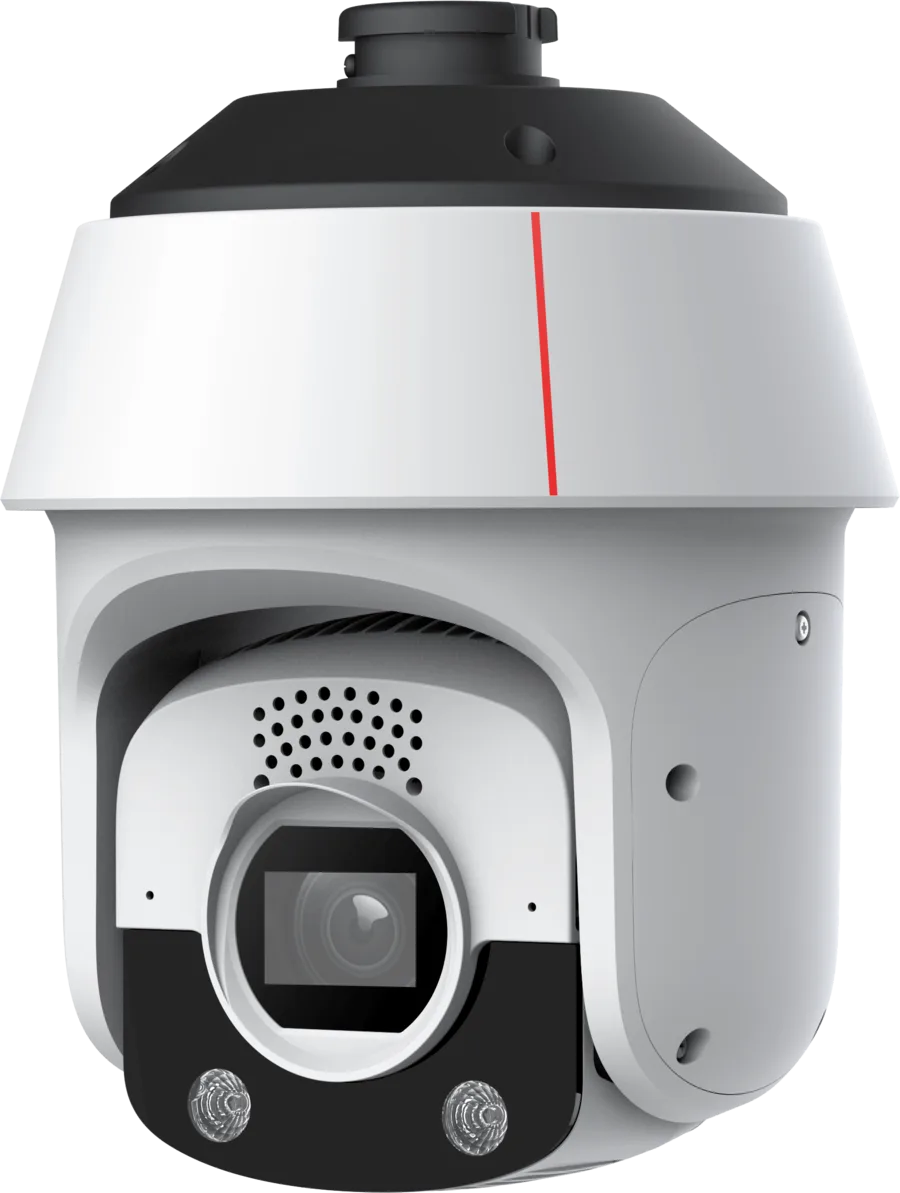
The one that follows
P5-5LRV(33x)A AI · PTZ dome with intercom
Tracks movement across a compound on its own, 33× optical zoom, and talks back through a built-in intercom. The camera the rest of a site is designed around.
CBC Surveillance × Holowits
Most cameras record what already happened. These ones notice what is happening, and tell you while there is still time to do something about it.
The range
The intelligence is much the same across the range. What differs is where each one belongs.
P5-5LRV(33x)A AI · PTZ dome with intercom
Tracks movement across a compound on its own, 33× optical zoom, and talks back through a built-in intercom. The camera the rest of a site is designed around.
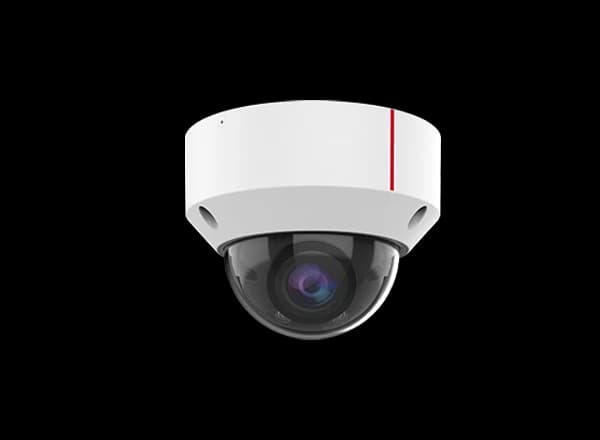
P4-5R(2.8-12)A AI · Fixed dome
Points at one approach and watches it properly. Takes new algorithms over its life without being replaced.
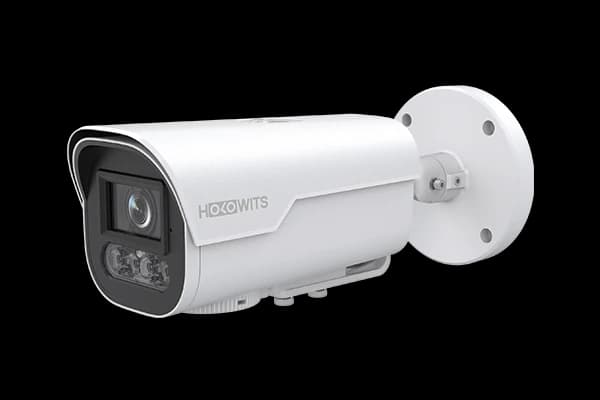
E1B-5LRV(2.7-12) AI · Dual-optical bullet
Full colour after dark rather than infrared grey. 50m infrared, 30m white light, audio on board.
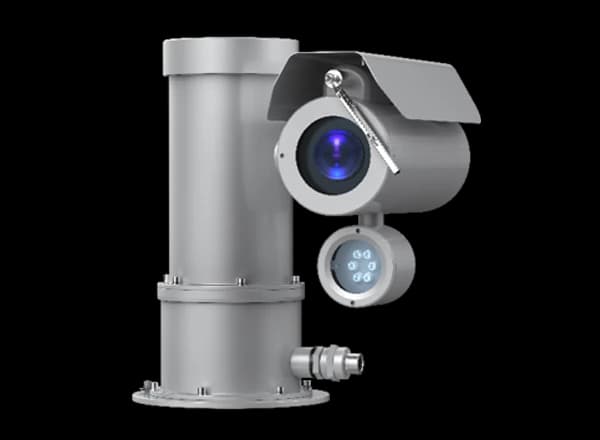
U9-4R(33x)A-Ex AI · Explosion-proof PTZ
Explosion-proof, for the zones standard cameras are not built for. Oil, gas, manufacturing.
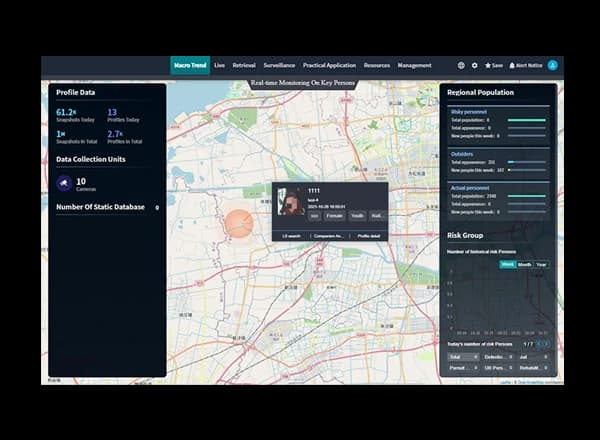
HOLOWITS S7700 · Video analysis platform
Where footage from every camera becomes something you can search, not something you have to scroll.
Before you replace anything
Keep what already works. Upgrade on your terms.
If your existing cameras speak ONVIF, the open standard most modern IP cameras use, they can stay on the new system. We check what you have during the site survey and tell you which cameras are worth keeping.
43 models in 5 groups
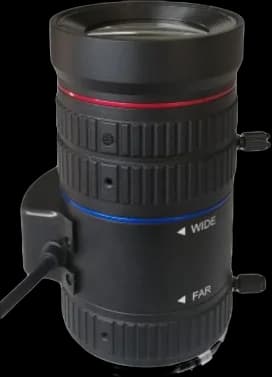
Fixed, varifocal, PTZ, dual-optical and explosion-proof, plus CS-mount lenses.
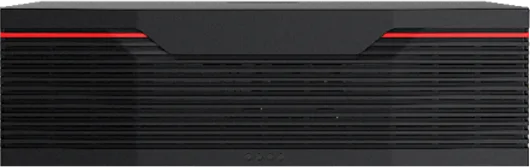
Video management, intelligent analysis and recording, from a single site to a city.
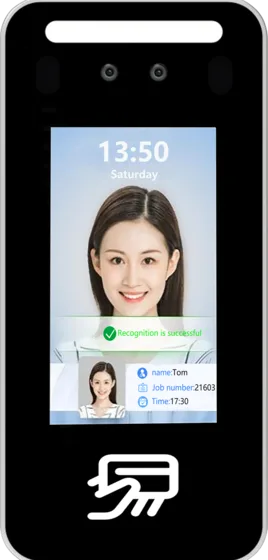
Readers, controllers, face recognition, gates and video intercom.
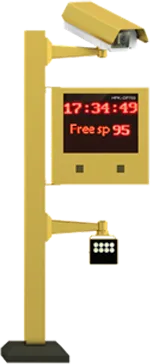
Plate recognition, guidance screens, barriers and space detection.

Alarm hosts, motion, glass-break, water detection and sounders.
Not on the list?
Tell us the site and what it needs. We will specify it from the whole Holowits catalogue, not just the models above.
Ask for the full rangeThe problem
Traditional CCTV is a recording device. It captures everything and understands none of it, and the footage only becomes useful once something has already gone wrong.
Forty screens at three in the morning, and nobody sitting in front of them.
“What happened?” is a question you only get to ask afterwards.
Footage nobody reviews is storage. It is not security.
None of that was a bad decision. It was the best available when you made it. The technology moved.
The camera still records. What is different is that it also understands what it is looking at, as it happens, and can act on it.
Motion detection triggers on anything that moves, which in Lagos means every branch, every downpour, every set of headlights sweeping a wall. Classification asks a different question: is this a person, a vehicle, or neither. Alerts that survive that filter are worth walking across a site for.
P5-5LRV(33x)A AI · P4-5R(2.8-12)A AI
Line crossing and area intrusion are drawn on the footage itself, not fenced in hardware. A loading bay can be open by day and armed after six without anyone rewiring anything.
E1B-5LRV(2.7-12) AI
Infrared tells you a person was there. Colour tells you what they were wearing, which car they got into, and whether the footage is worth anything to anyone afterwards. 50m infrared and 30m white light on the bullet.
E1B-5LRV(2.7-12) AI
Staff and resident vehicles pass without a guard leaving the post. Everything else gets logged with a plate attached, which turns a car park recording into something searchable.
PM LPR200A · PM LPR600AE, in the wider range below
Dwell time and crowd density are the two behaviours that precede most incidents in banking halls and retail. Both are measurable, and both raise an alert before anything happens rather than after.
P5-5LRV(33x)A AI · P4-5R(2.8-12)A AI · E1B-5LRV(2.7-12) AI
Processing on the camera keeps working when the network does not. Processing centrally sees every camera at once and finds the pattern no single camera can. Most sites want both, split by what each decision actually needs.
1 TOPS on each camera above · HOLOWITS S7700 centrally
Where it applies
Someone loitering at the ATM vestibule long after the branch has closed. Flagged while they are still standing there.
A perimeter that used to need four guard posts, watched by a system that only calls someone when there is a reason to.
Entrances, car parks and back of house covered without a wall of monitors, and without a member of staff watching them.
Vehicle and pedestrian movement understood at the gate, recorded in a form you can actually search afterwards.
Explosion-proof cameras for the zones where standard equipment is not allowed to go.
Why CBC
CBC Surveillance is Holowits’ registered authorised channel in Nigeria. We specify the system, install it, and support it afterwards.
Our engineers have been to the factory, worked with Holowits’ own teams, and installed this equipment on Nigerian sites under Nigerian conditions.
Authorised channel
Holowits
Nigeria
A camera that classifies what it sees covers what previously took two or three, because it is not being defeated by a moving branch.
Every alert that turns out to be a cat is a guard walking across a site for nothing, and one more reason to start ignoring alerts.
The P4-5R(2.8-12)A AI and the P5-5LRV(33x)A AI are software-defined: new algorithms load onto cameras already on your wall, so they get better over their working life instead of being ripped out for the next generation.
Talk to us
After your order is placed, subject to stock and site readiness.
Tell us the site and the problem. We will come back to arrange a time.
Book a consultationKnow what you need? Send the specifics and we will price it.
Get a quoteThe quickest way to reach our team during working hours.
+234 701 429 7953Straight answers
Yes, if your existing cameras speak ONVIF, the open standard most modern IP cameras support. They can stay on the new system. We check what you have during the site survey and tell you plainly which cameras are worth keeping and which are holding you back.
No. Most sites phase it. We agree an order based on what matters most and what the budget allows, then work through it. Compatible cameras stay where they are while the priority areas get done first.
Installation typically begins within 24 to 48 hours after your order is placed, provided the equipment is in stock and the site is ready for us.
We start with a site survey and a system design. Once that is agreed, we configure and deploy the cameras, recorders and network equipment on site.
How long the work takes depends on how many cameras there are and what the site needs before they go up. What does not vary is when we start.
Recording carries on. Footage is written to the recorder’s own drives on site, so an outage costs you remote viewing and any cloud features until the connection returns. It does not cost you footage.
The system needs a stable network and reliable power. In practice that means backup power. Cameras usually draw power over the network cable, so the recorder and the switch are the parts that need protecting. We size all of this as part of the design.
On the recorder’s drives on site, in the cloud, or both, depending on how the system is designed. Access is by named account with permissions you set, so people see the cameras their role requires and nothing else.
The footage is yours. Where you record and who you record carries obligations under Nigerian data protection law, and that is worth factoring into the design.
CBC Surveillance’s own technical team, here in Nigeria. Support and maintenance are available as an ongoing service, priced against the size of the system.
One year on the equipment.